Do the Driving Modes in Cadillac Lyriq Offer Different Ranges or Battery Usages?
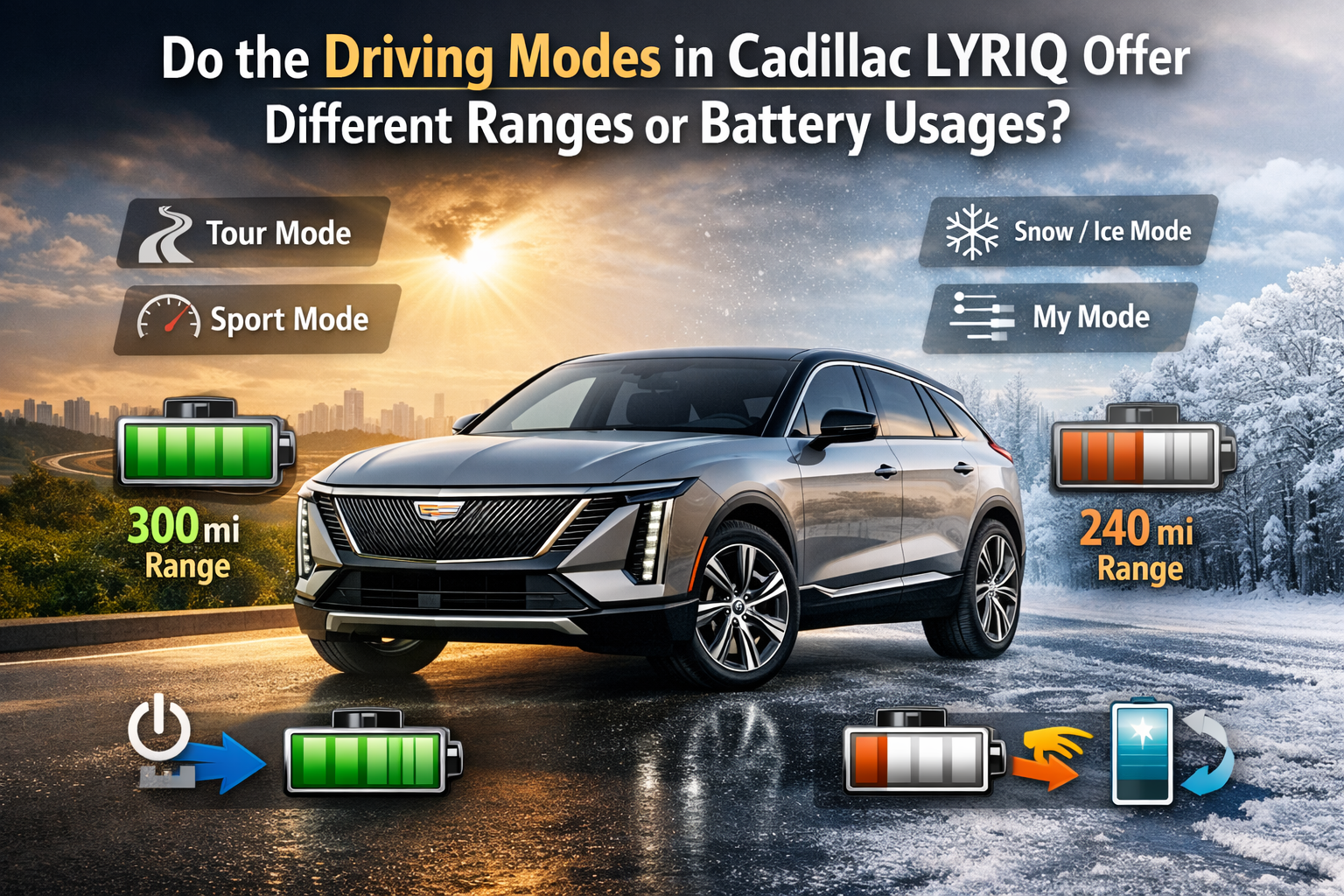
Yes, driving modes in the Cadillac Lyriq do affect real-world range and battery usage, but not by changing the battery itself. The vehicle uses the same Ultium-based battery pack in every mode. What changes is how power reaches the wheels, how strongly regenerative braking engages, and how drivers respond to throttle behavior. Over time, these differences alter energy consumption and miles per charge. That is why two drivers can see different range results on the same route.
The Short Answer (What Actually Changes — and What Doesn’t)
Driving modes do not change battery size, usable capacity, or the physical limits of the battery. Whether the vehicle runs in Tour, Sport, or Snow mode, the stored energy stays the same.
What changes is software behavior. Throttle response, torque delivery, and regen intensity shift between modes. These changes influence how drivers accelerate and decelerate, which leads to real-world range differences.
How the Cadillac Lyriq Uses Energy
The Lyriq runs on GM’s Ultium battery platform, which sends energy directly to electric motors. Unlike fuel engines, electric motors respond instantly to pedal input.
Because of this instant response, software tuning matters more than mechanical parts. Small changes in accelerator sensitivity can increase power draw without noticeable speed changes. This is why driving behavior plays a larger role in EV efficiency.
What Are the Different Drive Modes For?
Driving modes exist to adapt the vehicle to different conditions and driver needs. Some modes focus on smooth efficiency, while others prioritize responsiveness or traction. They do not increase or reduce battery size. They change how easy or difficult it is to drive efficiently in daily conditions.
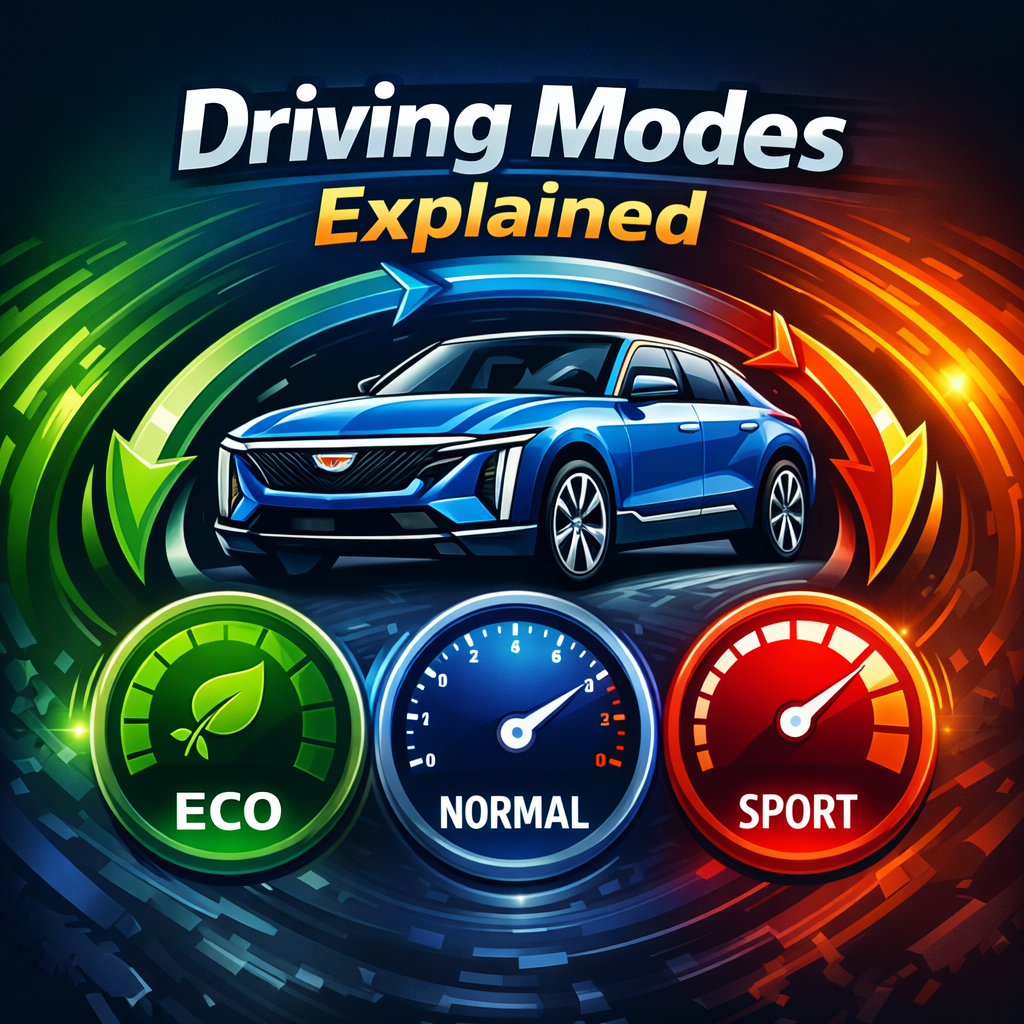
Driving Modes Explained
Tour Mode
Tour Mode smooths throttle response and moderates torque delivery. Acceleration feels predictable and controlled, which helps maintain speed consistency.
Because it reduces aggressive power spikes, Tour Mode often delivers the most stable real-world range. Many drivers see it as the baseline for efficiency in mixed city and highway driving.
Sport Mode
Sport Mode sharpens throttle mapping and delivers torque more quickly. The vehicle feels more responsive, especially during launches and passing.
The higher energy use comes from acceleration spikes, not top speed. Repeated quick accelerations raise kWh per mile, which reduces overall range.
Snow / Ice Mode
Snow and Ice Mode prioritizes traction control and stability systems. Power delivery becomes more controlled to limit wheel slip on slick surfaces.
Cold weather already reduces battery efficiency. Cabin heating, road resistance, and limited regen often affect range more than the mode itself.
My Mode
My Mode allows drivers to customize throttle feel and regenerative braking. Efficiency depends heavily on how these settings are configured.
When tuned for smooth acceleration and stronger regen, My Mode can match or exceed Tour Mode efficiency. Aggressive tuning produces the opposite result.
What’s the Difference Between Touring Mode and Sport Mode?
Tour Mode focuses on smooth power delivery and efficiency. Sport Mode focuses on quick response and stronger acceleration. The battery does not change. Driver behavior usually does, which explains the range difference.
Why Driving Modes Affect Range Indirectly
Driving modes influence how drivers drive. A sharp pedal encourages aggressive acceleration. A smooth pedal promotes calmer inputs.
Two drivers using the same mode can see different results because habits differ. This explains why mode impact feels inconsistent across owners.
Regenerative Braking — Often More Important Than the Mode
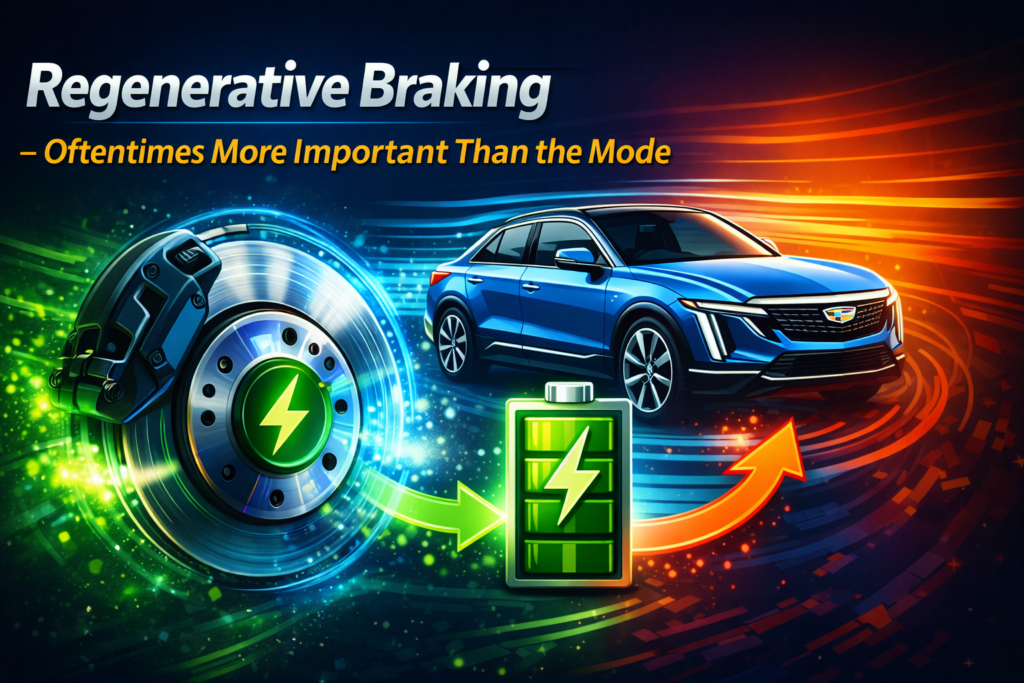
Regenerative braking recovers deceleration energy and sends it back to the battery. In stop-and-go traffic, regen behavior can affect efficiency more than the selected driving mode.
One-Pedal Driving
One-pedal driving increases regen when lifting off the accelerator. In city driving, this can improve energy recovery and reduce brake use.
On highways, its impact is smaller because braking events are limited.
Regen on Demand
Regen on Demand lets drivers manually increase regenerative braking. It works well in traffic, downhill driving, and controlled slowdowns.
Used correctly, it improves energy recovery without reducing travel speed.
Single-Pedal Driving On vs Off — Does Range Change?
In city conditions, single-pedal driving often improves efficiency by capturing more deceleration energy. On highways, the difference is minimal because steady cruising limits regen opportunities.
What Is the True Real-World Range of the Cadillac Lyriq?
There is no single true range. EPA estimates reflect controlled testing, not daily use. Real-world range depends on speed, weather, terrain, driving style, and climate control usage.
Real-World Range Differences You Can Expect
Most drivers notice range differences between modes, but they are moderate. Tour Mode usually provides the most consistent efficiency. Sport Mode often increases energy use due to acceleration behavior.
A realistic difference is around 5–15%, depending on conditions and habits. Speed and climate use often matter more than mode choice.
Why Is There Such a Big Range Difference Between RWD and AWD?
Dual-motor AWD systems add weight and increase power demand. Even when only one motor drives at times, additional components create energy losses. This explains why AWD versions often show lower range than RWD models.
Cadillac Lyriq AWD Range in −15°C to −20°C Conditions
In extreme cold, battery efficiency drops and cabin heating demand rises. AWD systems also consume more energy in slippery conditions. These factors combine to reduce winter range more than driving mode changes.
Is It Okay to Switch Drive Modes While Driving?
Yes, switching drive modes while driving is safe under normal conditions. Mode changes are software-based and designed for real-time use. Drivers should avoid switching during heavy acceleration or complex maneuvers.
What Affects Range More Than Driving Modes
Speed and Acceleration Patterns
Higher speeds increase aerodynamic drag. Aggressive acceleration raises power draw.
City vs Highway Driving
City driving benefits from regen. Highway range depends on speed consistency.
Weather and Temperature
Cold temperatures reduce battery efficiency and increase heating demand.
Terrain, Tires, and Vehicle Load
Hills, low tire pressure, and heavy loads raise energy consumption.
How to Choose the Right Mode for Your Situation
Daily Commuting
Tour Mode or a calm My Mode works best.
Long Highway Trips
Tour Mode supports consistent cruising.
Winter or Low-Traction Roads
Snow / Ice Mode improves control and safety.
Short Performance Driving
Sport Mode delivers response. Switching back helps efficiency.
Practical Tips to Maximize Range Without Obsessing
Use Tour Mode as your default. Save Sport Mode for specific moments. Drive smoothly rather than slowly. Watch energy consumption instead of focusing only on range estimates.
A Simple At-Home Test to See Mode Impact Yourself
Drive the same route under similar conditions. Compare Tour Mode and Sport Mode using kWh per mile. This shows how behavior affects efficiency more than settings.
Do Driving Modes Matter More Over Time?
Long-term efficiency depends more on habits than modes. Software updates may refine behavior, but smooth driving and controlled acceleration matter most. Battery health depends more on charging practices than mode selection.
Final Verdict
Yes, driving modes affect battery usage in the Cadillac Lyriq. They do so by shaping driver behavior, not by changing hardware. For most drivers, Tour Mode or a well-tuned My Mode offers the smartest balance of comfort and efficiency.